
An app built specifically for the bar industry
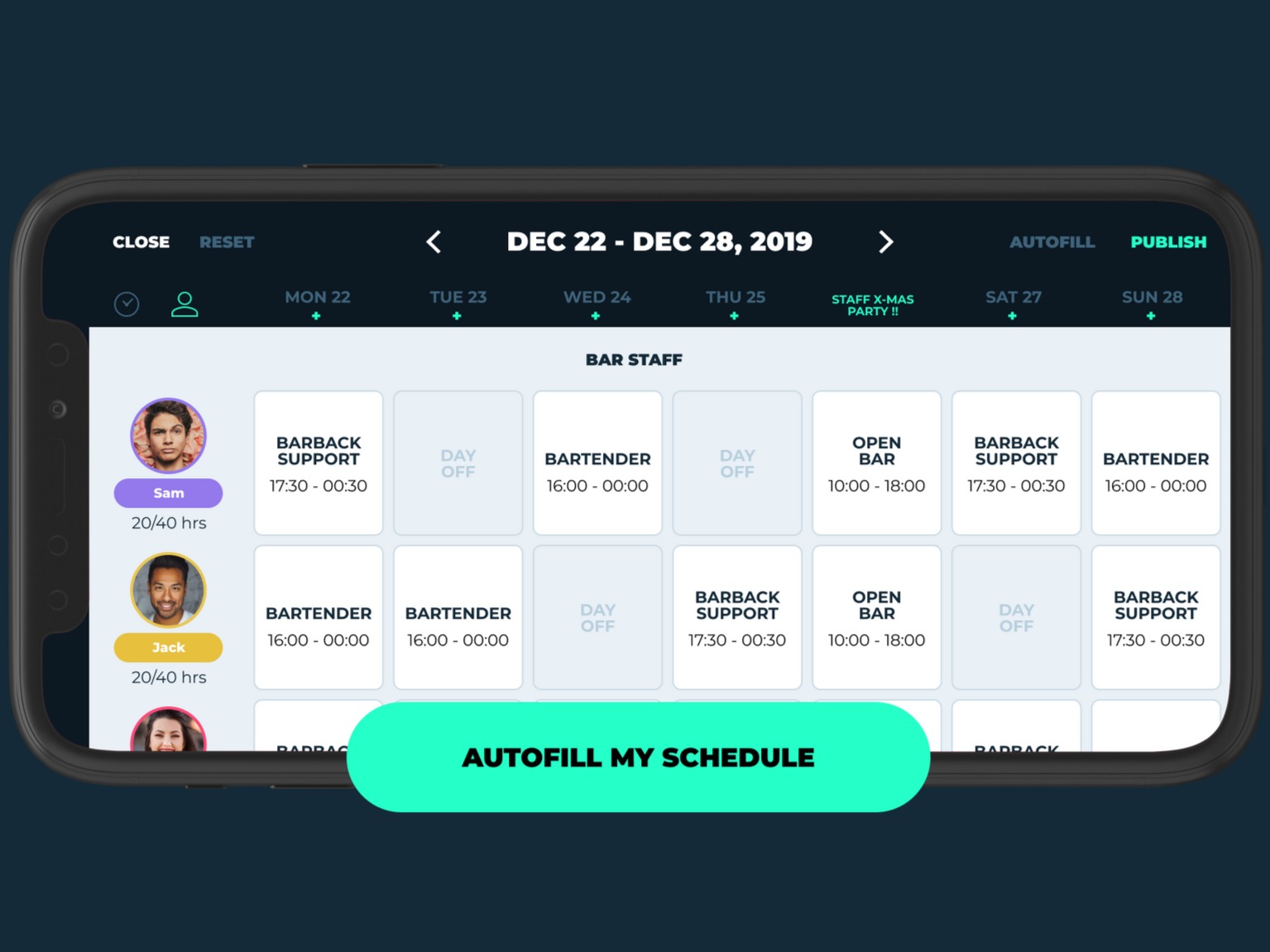
Blend is a leading app solution that redefines how the bar teams work together. It has already partnered up with industry giants like Bacardi and is used in 5 countries across the world. Blend can automatically allocate shifts via its smart and adaptive algorithm, notify the team members of their work hours, and improve the team coordination process via its intuitive design that makes rapid responses possible.
How does Blend differ from the conventional task management apps or software? Simple. Blend was built specifically for the bar industry. It was designed by incorporating the deep knowledge of world-class bartenders.
Invelopment Partners, the venture builder behind Blend and other great products, hired Capacitor Partners to help out with Blend’s initial product strategy. Our job was to assist Blend’s founders in the market validation of their concept, and recommend the key areas and features they should focus on.
Step 1: Validating the idea
As a first step we had to determine if the concept was viable. Coordinating the staff shifts was obviously a tedious process, however we had to ask (among other things):
The above questions would help us determine the adoption and market demand levels in the target markets.
Following a thorough analysis of the target markets in five countries via in-person interviews with key personnel and analysis of market reports, we concluded that the bar industry was becoming more sophisticated year on year. As a result, it was also becoming more demanding and difficult to manage a bar due to the ever increasing expectations. The existing solutions were not sufficient to satisfy the industry’s needs in the longer term, as they were not tailored around the bartending management processes.
Drawing on these results, we judged that the concept was valid. Our next step was to determine what should be included in the solution.
Step 2: Extracting deep know-how from the industry and laying out the roadmap
Determining the core features
We continued our interviews with bar managers and owners. We asked them to outline their key issues and possible solutions in an open-ended interview manner. Accordingly, we tracked patterns in their answers - in other words, problems and solutions that were recurring. These recurring replies shaped our core features. Along these lines, it became (unanimously) clear that the solution should have been a mobile application.
We then detailed how each specific feature should have been constructed and functioned. Subsequently we prioritized the features based on a) their importance level to the bartending industry’s professionals and b) the difficulty-level to build them programmatically.
Launching a minimum viable product and creating a roadmap
A handful of core features, which sharply focused on solving the problem in hand, were the only ones to be included in the first version of the application. Features that could enhance the solution, were to be added in subsequent iterations/versions of the app.
The reasoning was simple. Firstly, we aimed to reduce our clients risk and expenses by leaving out functionalities that may not have been as widely used or beneficial to the core product. Secondly, subsequent functionalities of the app could be determined following actual user feedback and requests - thus, if the users kept coming back requesting a functionality that we may have left out or not even considered, then the development team could add them accordingly.
Some of the core features included:
Step 3: RFP and alternative concepts
As a final step, we detailed a Requirements Specification document that could act as our client’s RFP (request for proposal). This document was sent to a number of partner development agencies, to provide quotations. The RFP included specifications about the functionality of each feature and the features in each screen, as well as use-cases that explained how each function of the app was to be used via hypothetical scenarios.
Ultimately, based on the market data we had collected and processed through our research and interviews, we proposed two alternative spin-offs to the original concept - where Blend could eventually pivot its database/network in the future, as to address further problems in the bar industry (and the wider hospitality industry) - both at the client and the business level.
What happened next?
Blend launched its product and shortly thereafter raised its first seed round. Blend’s team quickly observed patterns in the usability of the app, as to build an algorithm that would automatically allocate shifts to the team members. It was soon adopted by bars in multiple countries.
A new bi-product born out of the pandemic
Moreover, while exploring new market opportunities, Blend’s team also spotted a new problem/opportunity that became apparent during the first wave of COVID-19 pandemic: The need to order from your table, without any human interaction, and specifically being able to open up a tap that is shared with friends. No other solution offered the tap functionality. As a result, they launched a new bi-product called Blend Menu, which is already embraced by multiple venues in Blend’s country of origin - Cyprus.